LivingFeature
The quiet art of starting over
Change rarely arrives with a fanfare. More often it begins with a new notebook, a moved chair or a longer walk home — small decisions that quietly clear a space for something else.
In this story · 4 sections
There is a particular kind of afternoon, usually in early autumn, when I find myself standing in the middle of a room I know very well and seeing it as though for the first time. Nothing has happened. No letter has arrived, no door has closed. And yet something has shifted, the way the light shifts in October: not all at once, but enough that you notice you have been squinting.
I used to think that starting over required an event. A move across the country, a resignation, the end of something with a name. Those beginnings exist, of course, and they arrive with their own weather. But the longer I live, the more I suspect that most of our changes are made in smaller increments, through decisions so modest they barely register as decisions at all. We buy a notebook. We move a chair. We walk home a different way. We stop pretending we will ever finish the thing in the drawer.
This is not an argument for reinvention. I am wary of that word, with its promise of a new self delivered in thirty days. It is, rather, an attempt to pay attention to the small rituals that make room — that clear a little space on the table so that something new might be set down there, if it wants to be.
The blank page
I have a weakness for notebooks that borders on the devotional. I keep a stack of them on a shelf above my desk, most only partly used, some untouched for years because they seemed too good to spoil. A friend once told me that buying a new notebook is the most optimistic thing an adult can do for the price of a sandwich. I laughed, and then I thought about it for a week.
What a fresh notebook offers is not really blankness. It is permission. The old one carries its history with it: the lists that were never crossed off, the half-sentences, the phone number of someone you no longer call. To open a new one is to agree, privately, that the record can begin again from here. Nothing in the old book is erased. It is simply closed and placed on the shelf with the others, where it can be consulted but no longer has to be carried.
I have learned to make a small ceremony of it. I write the date on the inside cover, and underneath it a single line about what the season feels like. Not a resolution — I gave those up long ago — but an observation. “The radiator has started ticking again.” “Everyone is tired.” “The fig tree next door dropped its leaves all at once.” Months later, those lines are often the only thing in the book I reread, because they tell me where I was standing when I began.
Moving the furniture
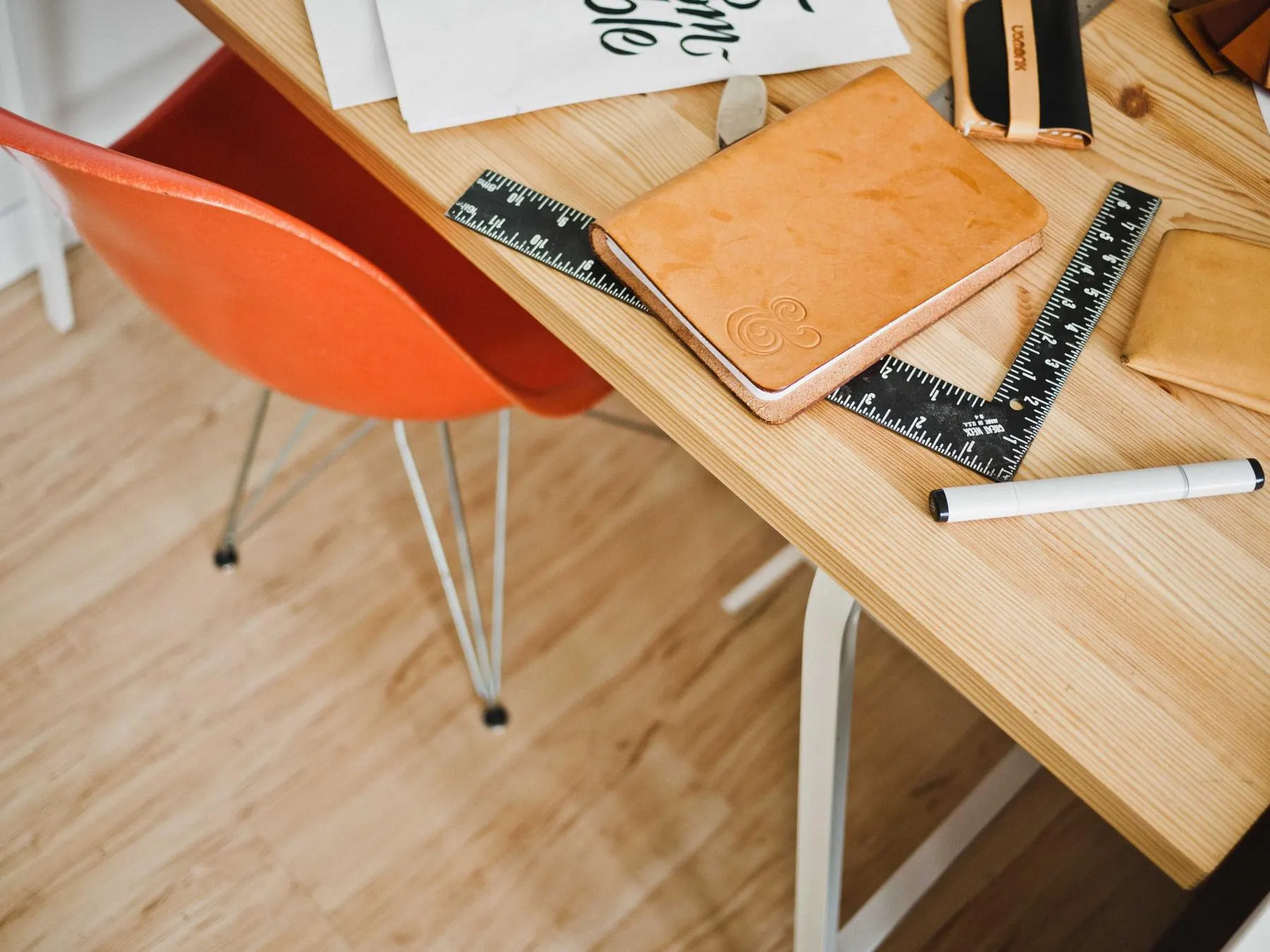
My grandmother rearranged her sitting room every spring and every autumn, with a regularity my grandfather treated as a natural phenomenon, like the migration of birds. He would come home to find the sofa under the window instead of against the wall, the reading lamp on the other side of his chair, and he would sit down in the new arrangement without comment. I asked her once why she did it. She said the room got tired. I think she meant that she did.
There is a reason this works, and it is not mysterious. We stop seeing the things we live with. A picture that has hung in the same place for five years becomes part of the wall; a chair that always faces the same direction produces the same thoughts. Move it a few feet and the room has to be learned again. The light falls differently across the floor. You discover a corner you had forgotten you owned.
Last winter, after a long stretch in which I could not seem to write anything worth keeping, I turned my desk away from the window and toward the bookcase. It was an impractical decision. I lost my view of the street and of the woman across the road who waters her balcony plants in a dressing gown at seven every morning. But the desk faced something new, and for reasons I still can’t entirely explain, the sentences began to come back. Perhaps it was only that I was no longer watching for something to happen. I was looking at what was already there.
A different way home
There are routes we take so often that our feet know them better than we do. Mine runs from the bus stop past the laundromat, the shuttered cinema and the corner where the pavement buckles over a tree root, then up the hill to my door. I could walk it asleep. On some evenings I suspect I have.
A few months ago, for no reason other than restlessness, I got off the bus one stop early and walked home through a part of the neighborhood I had never properly seen. It added eleven minutes to the journey. In those eleven minutes I passed a tailor’s shop with a single gray suit in the window, a front garden given over entirely to artichokes, and a small hall from which the sound of a children’s choir drifted out into the dusk, slightly off-key and wholly committed. None of it was remarkable. All of it was new.
I have taken that route perhaps twice a week since. It has not changed my life. But it has loosened something — a sense that the shape of my days was fixed, and that I was simply moving through it. The longer way home is a reminder that the map is larger than the path we wear into it, and that the first step toward a different life is often just a different street.
Letting go of the thing you meant to finish
The hardest of these rituals, for me, is the one that involves an ending. For nearly four years I carried around the idea of a book about my grandmother’s village, a place I had visited only twice as a child and had come to love mostly through her stories. I had boxes of notes. I had a title. What I did not have, I eventually admitted, was the desire to write it. I had the desire to have written it, which is a different thing entirely, and much heavier to carry.
Letting go of a project is rarely dramatic. Nobody burns the boxes. In my case I took the notes out of the folder marked with the title and put them into a folder marked “Village,” which felt like returning them to what they were before I asked them to become something else. Then I put the folder in a cupboard, closed the door and made a cup of tea.
What surprised me was the space it left. Not an empty space, exactly, but a cleared one, like a table after the dishes have been taken away: still marked with the rings of the evening, ready for whatever comes next. Within a month I had begun writing something smaller that I actually wanted to write. I don’t think that would have happened if the old project had still been sitting in the corner of my attention, waiting for me to feel guilty about it. Letting go, I have come to think, is also a way of beginning.
Letting go, I have come to think, is also a way of beginning.
None of these rituals is a method. They are simply things I have noticed myself doing at the turning points of the year, when the old arrangement begins to feel like a coat that no longer fits across the shoulders.
What they share, I think, is a kind of modesty. They don’t demand that we become someone else. They ask only that we make a little room — a clean page, a moved chair, eleven extra minutes, an emptied folder — and then wait, with some patience, to see what fills it. A cleared space is still useful when it is empty. It is where you stand when you look around.
This autumn I bought a new notebook. On the inside cover I wrote the date, and beneath it: “The light is lower. I am ready for something.” I don’t yet know what. But the page is open, the desk is facing the bookcase, and I have started, once again, to get off the bus one stop early.