PlacesFeatureLong read
A city best understood on foot
In a hillside port city of stairways and laundry lines, our places writer leaves the map behind and learns that distance is measured in landings, bakeries and the occasional bean.
In this story · 5 sections
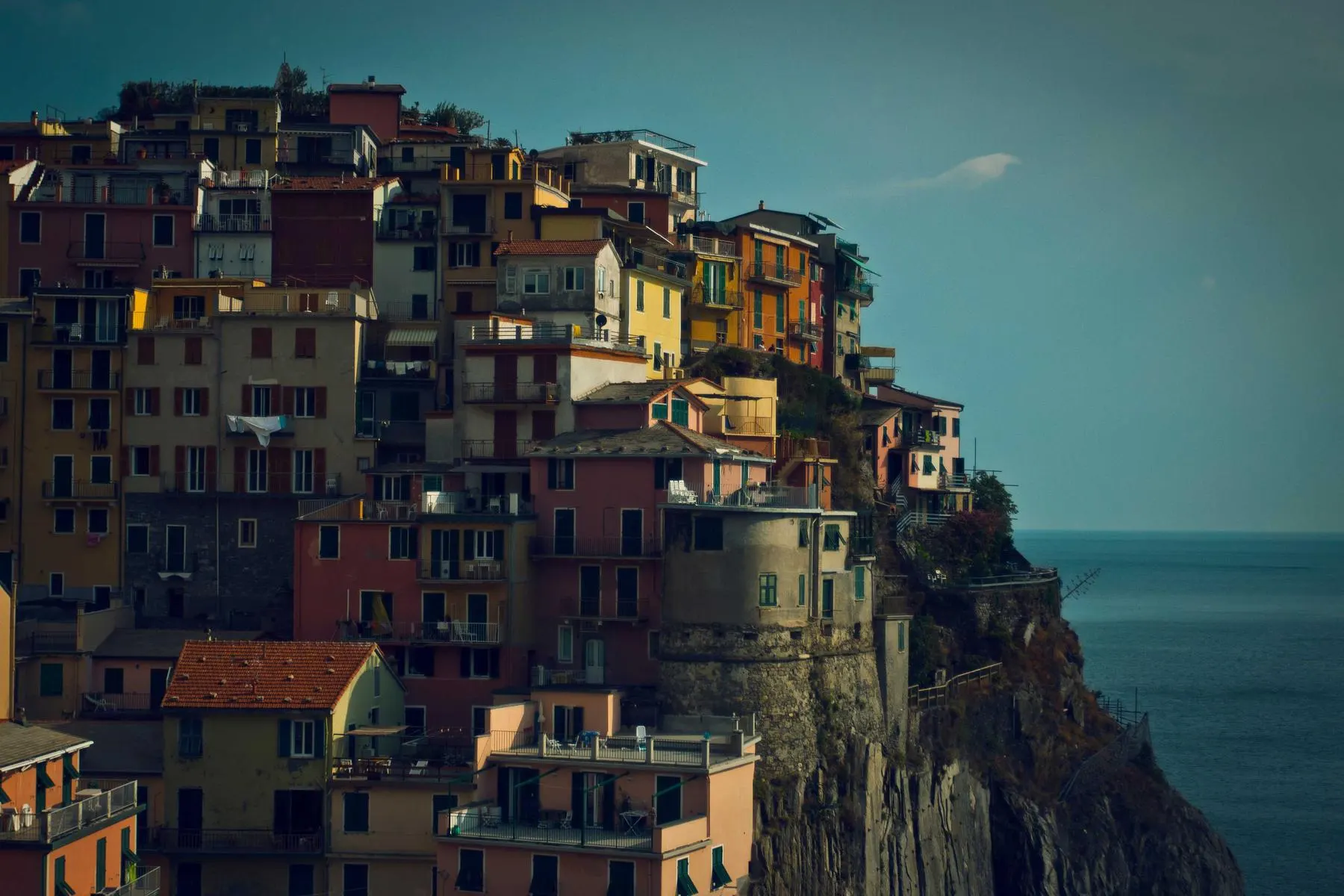
The city is built on its hill the way a cat is built on a windowsill: completely, and with no regard for anyone who has to get past. From the water it looks like a single tilted surface of roofs, ochre and cream and a pink that has faded to the color of an old eraser, stacked so closely that the streets between them are invisible. You know the streets are there only because people keep stepping out of them.
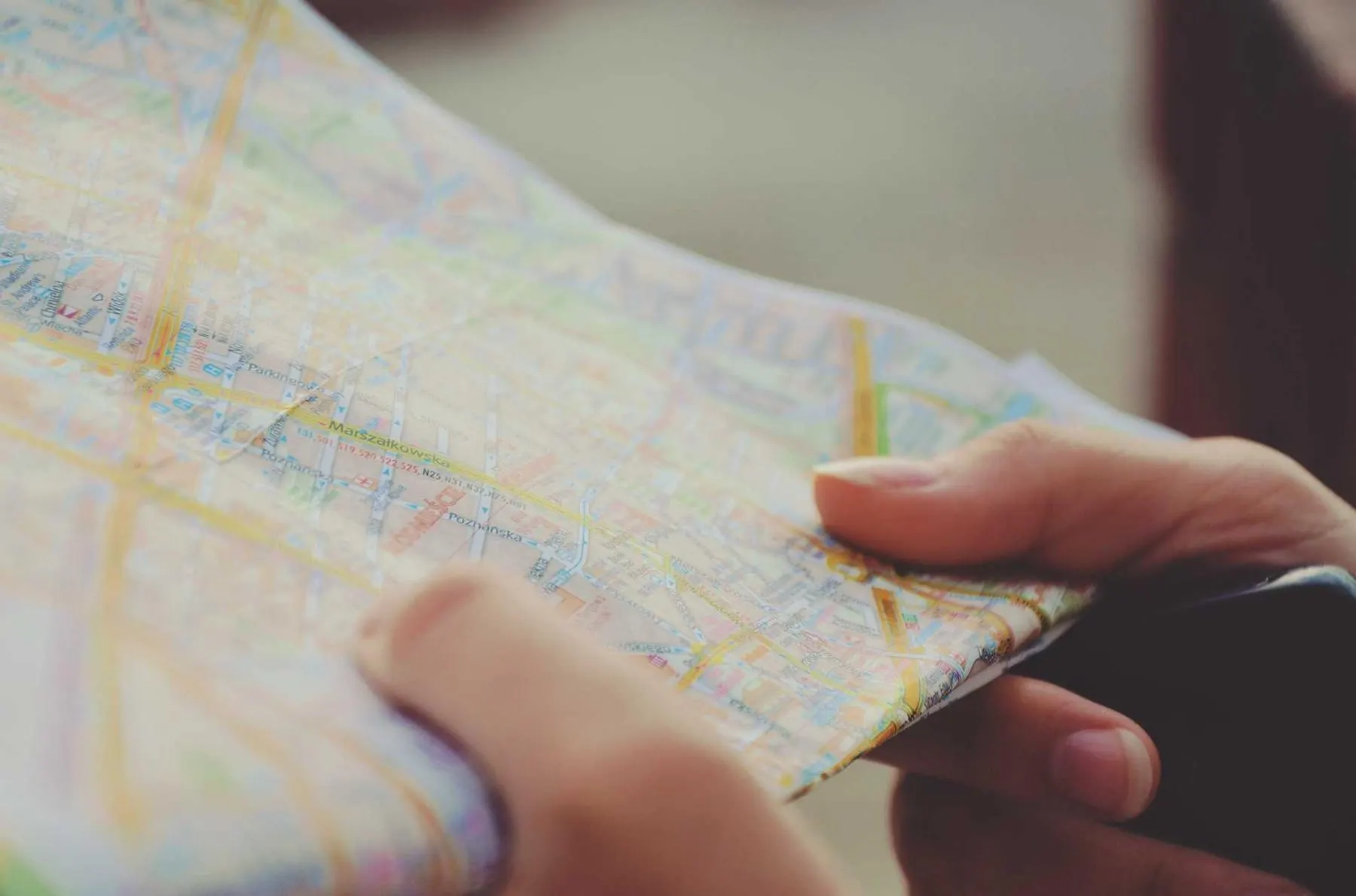
I arrived on a late ferry with a small bag, a room booked somewhere near the top, and a resolution I had made around the third hour of the crossing while watching a man in a raincoat try to fold a paper map against the wind. I would not use a map. Not the paper kind, and not the one in my pocket that speaks in a calm voice and believes it knows where I want to go. I would find my way by walking, and by asking, and by getting it wrong.
This was not a principled stand. I like maps. I own several I will never use. But I had been to too many places I could describe only as a blue dot moving along a line, and I wanted, for once, to know a city the way the people who live in it do: not from above, but from inside, at the height of someone carrying shopping up a hill.
Leaving the map behind
The first thing you lose without a map is your sense of distance. The second is your dignity. On my first evening it took me fifty minutes to reach a room that, I later discovered, was nine minutes from the ferry terminal as the gull flies. I went up the wrong stairway, then down a better one, then along a lane that narrowed until I was walking sideways past a row of potted geraniums, and finally into a small square where an old man on a folding chair pointed, without being asked, at a door behind me.
“Everyone ends up here,” he said. I chose to take this as a welcome.
What I did not yet understand was that the city does not work on the horizontal. On paper, two streets may run side by side, a stone’s throw apart. On foot, one may be forty steps above the other, connected only by a stairway that begins behind a bakery and ends in somebody’s courtyard. Distance here is not measured in yards but in effort, in the number of landings, in whether you are going up or down. A place that is close is a place you can reach without stopping to breathe.
By that measure, my room was very far away indeed. I slept well.
The stairways
Nobody I asked could tell me how many stairways there are in the city. A woman selling lemons from a crate guessed hundreds. A boy on a bicycle — how he had got a bicycle up there remains one of the great unanswered questions of my working life — said there was only one, and that it never ended.
He was closer to the truth. The stairways are less a feature of the city than its circulation. Some are grand, with wide stone treads worn into shallow bowls by centuries of feet and iron railings painted a green that has been reapplied so many times it has the depth of a pond. Others are barely a shoulder wide, wedged between two houses, with steps of such uneven height that they seem to have been laid by someone working from memory. You learn to read them as you climb. A step polished smooth in the middle means a route people actually use. A step with moss on it means you are about to discover why they don’t.
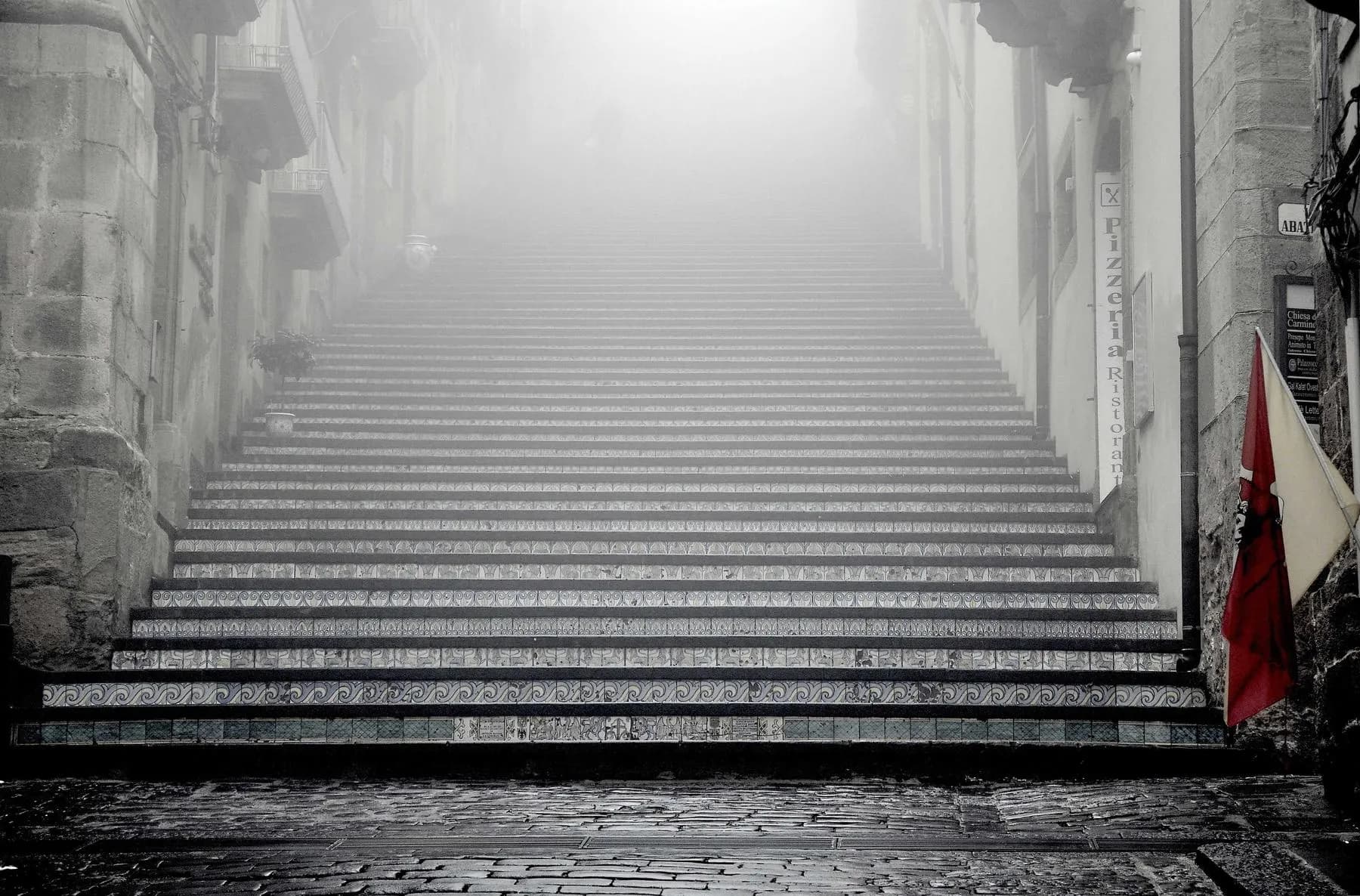
On my second morning I decided to follow one stairway from the bottom to wherever it ended. It began beside the fish market, between a stall selling sardines and a stall selling knives for cleaning sardines, and rose in short flights past doorways, a small shrine with plastic flowers, a cat asleep in a flowerpot, and a landing where three women had set out kitchen chairs and were shelling beans into a basin. They looked up at me, red-faced and breathing hard, with the polite pity of people who had been climbing these steps since they were two.
“Where are you going?” one of them asked.
I said I didn’t know. This seemed to satisfy them more than any destination would have. One of them offered me a bean.
The stairway ended, eventually, at a small terrace with a single bench and a view over the whole lower city: roofs, cranes, the slow rectangles of cargo ships waiting in the bay. Nobody else was there. I sat on the bench for twenty minutes and did not take a photograph, which for me amounts to a personal record.
Six in the morning
The best hour to walk the city is the one most visitors sleep through. At six the streets belong to the people who make them work: men hosing down the paving outside cafés, delivery vans reversing up lanes that should not admit vans, a priest in a quilted jacket unlocking a side door with a key the length of a spoon. The air smells of wet stone and, from about a quarter past, of bread.
I found the first bakery by smell alone, which remains the only reliable navigation system I have ever used. It was a room the size of a garage with a counter, a scale and a doorway, behind which two men in white vests moved trays in and out of an oven with the unhurried precision of people who have done the same thing ten thousand times. There was no sign. A line of five people stood outside, none of them talking, all of them holding coins.
I joined the line and, when my turn came, pointed at what the woman before me had bought: a round, dense loaf with a cracked top, and a small twisted roll glazed with something that turned out to be honey and fennel. The baker wrapped them in paper and named a price so low I asked him to repeat it. He did, more slowly and a little louder, as though I might be hard of hearing rather than simply foreign.
I ate the roll on a low wall by the harbor, watching the fishing boats come in. The gulls had already worked out that I was the kind of person who eats on walls, and arranged themselves accordingly. By seven the light had turned from gray to a thin gold that caught the upper floors of the houses first, so that the city seemed to wake from the top down, the way some people do.
Over the following days I found four more bakeries the same way, each a short walk from the last if you knew the right stairway and a long one if you didn’t. I never learned their names. I am not sure they had any. I began to think of the city as a loose net of bread, its lanes the threads connecting one warm room to the next.
What the laundry knows
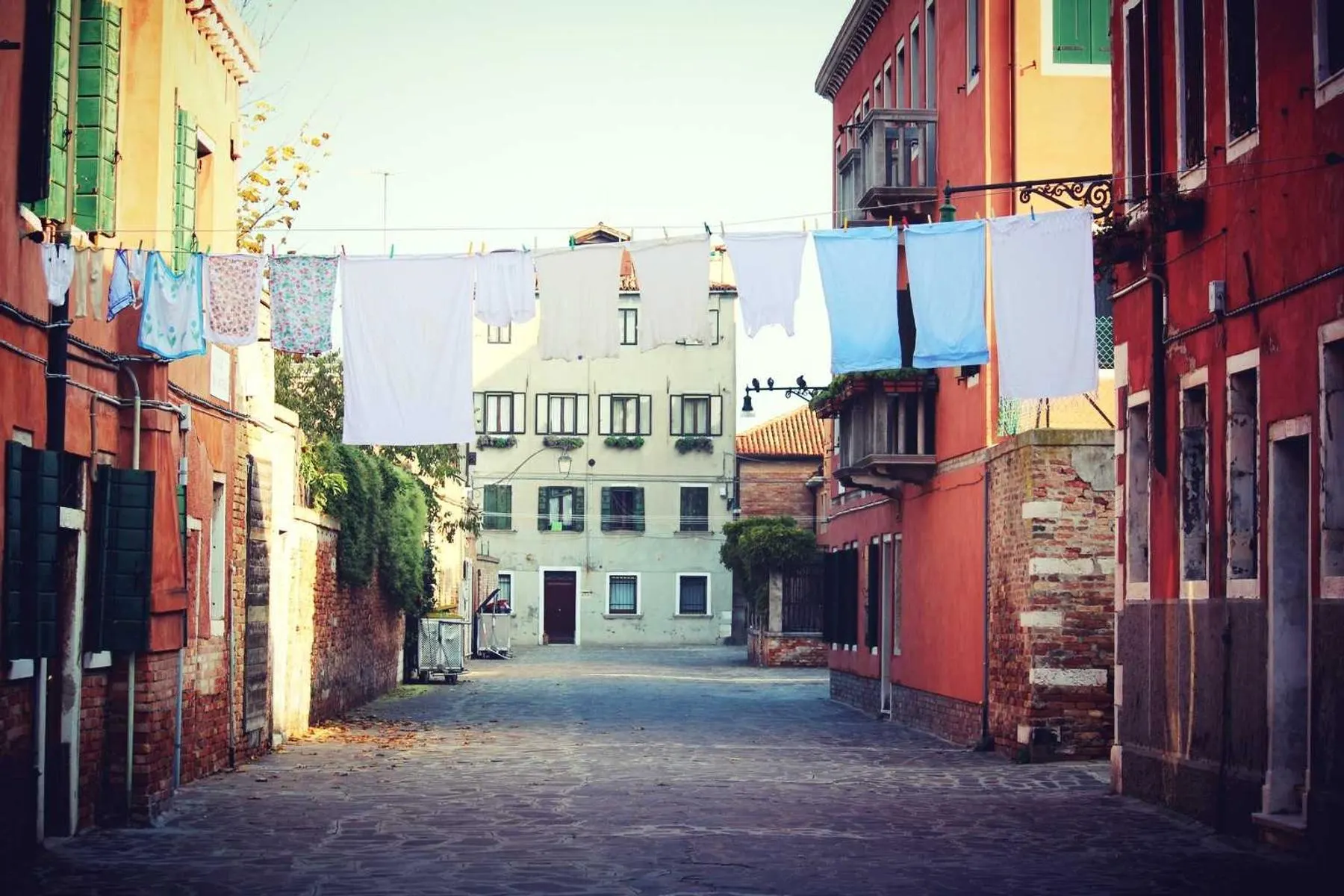
If the stairways are the city’s circulation, the laundry is its weather report. Lines run between windows across almost every lane, sometimes three or four stories up, and on any morning that is not actively raining they are hung with sheets, shirts, tablecloths, school uniforms and an astonishing quantity of socks. I began to read them as you might read a local paper. A line of small dresses meant children. A single pair of enormous trousers, pegged at the cuffs, meant a man who did not wish to share his business with the neighbors but had been left no choice.
The laundry also, it turns out, tells you where you are. On my fourth day I realized I was recognizing lanes not by their names, which I never learned, nor by their buildings, which all looked faintly alike, but by the washing. The lane with the yellow bedsheet. The corner with the striped towels. The narrow passage where someone hung out a single blue apron every morning, perfectly ironed, like a flag. When the yellow sheet was taken in one afternoon I was briefly and genuinely lost, and felt the betrayal keenly.
This is the kind of knowledge no map can give you, because it changes daily and belongs to nobody in particular. It is local in the truest sense: you can acquire it only by being there, repeatedly, at street level. It is also, I suspect, how the people who live here find their way — not by a grid, which barely exists, but by an accumulated sense of what is usually where. The woman with the lemons. The cat in the flowerpot. The man on the folding chair who points at doors.
I tested this theory by asking for directions as often as I could bear to. Nobody ever gave me a street name. They gave me landmarks, most of them alive or edible. Go down past the fountain that doesn’t work, turn at the shop with the birdcage, keep going until you smell the fish. Twice I was simply taken by the elbow and walked there, a service no app has yet offered and which I would happily pay for.
Distance here is not measured in yards but in effort, in the number of landings, in whether you are going up or down.
How far is far
By the end of the first week my legs had stopped complaining and started negotiating. I had also developed opinions. I knew which stairways held shade in the afternoon and which turned into ovens. I knew that the long way round the hill was often faster than the short way over it, and that the short way over it was always more interesting. I knew that to reach the old market from my room I should go down rather than across, and that the way back up was best attempted after lunch, slowly, with a stop at the terrace with the single bench.
Something had happened to my sense of the city’s size. When I arrived it had seemed enormous, an endless tangle of roofs impossible to hold in the mind. Now it seemed both smaller and deeper. Smaller because I could cross it, top to bottom, in under an hour if I chose my stairways well. Deeper because every part of that crossing contained more than I had noticed the day before: a doorway with a tiled saint above it, a courtyard with a lemon tree, a window where a man sat every afternoon repairing radios, their insides spread across a towel like a patient’s.
Walking does this to a place. A city seen from a car or a screen is a set of destinations joined by intervals you are trying to shorten. A city on foot is all interval. The getting there becomes the thing itself, and the destinations — the museum, the cathedral, the restaurant someone insisted on — turn into pleasant interruptions in a longer conversation with the streets.
I won’t pretend this is efficient. One afternoon I spent two hours trying to reach a particular church that I could see perfectly well from my terrace, and never got there. Every lane that seemed to lead toward it bent away at the last moment, or ended at a wall, or delivered me into another small square with another old man on another folding chair. Possibly the same one. The city may have only one, and move him around at night.
I gave up at dusk and walked home, and on the way I passed through a lane I had never seen, where a family was eating dinner at a table set out in the street. A radio was playing. Someone had strung a bulb from the laundry line above them. As I edged past, apologizing, a grandmother waved at me with her fork, in a manner that was either a greeting or an invitation, and I was too shy to find out which. I have regretted that more than the church.
I never did find the church. I have decided that this is fine.
On my last morning I went down to the ferry by a stairway I had climbed perhaps a dozen times. I knew where the steps dipped and where the railing was loose. I knew the cat would be in the flowerpot, and it was. The women on the landing were not there yet — too early for beans — but their chairs were stacked against the wall, waiting. At the bottom, the bakery beside the fish market was just lifting its shutter, and I bought one last twisted roll and ate it standing up.
From the deck the city looked as it had when I arrived: a single tilted surface of roofs, the streets invisible between them. But I knew now that they were there. I could have traced some of them with a finger — the stairway from the fish market, the lane of the yellow sheet, the long way round the hill. Not on a map. On the city itself, the way you might trace the lines on a hand you had held for a while.
The man in the raincoat was on the return ferry too, still wrestling his map against the wind. I thought about telling him to put it away. Then I thought about how long it had taken me to learn the same thing, and how much of the learning had been the point, and I let him be.