CultureInterview
A record shop that refuses to hurry
Marcus Hale runs a basement shop of secondhand records, with two listening booths built from old wardrobes and a handwritten card in nearly every bin. He talks about regulars, recommendations and taking your time.
In this story · 4 sections
The shop is three steps down from the street, and the first thing you notice is the smell: cardboard, dust warmed by an old radiator, and something faintly sweet that turns out to be the owner’s tea. The second thing is the cards. Tucked into the front of nearly every bin is an index card written in blue ballpoint, explaining in two or three sentences why you might want the record behind it.
Marcus Hale has run the shop for nineteen years. He buys mostly from house clearances, prices everything himself, and keeps two listening booths at the back — converted wardrobes, lined with carpet offcuts — where anyone can play anything before they buy it. We talked on a slow weekday afternoon, between customers, while he mended a split inner sleeve with a strip of archival tape.
The shop has no website and a phone that is rarely answered. It opens in the late morning and closes whenever the last person in the booths comes out.
How it started
You didn’t set out to run a record shop. How did it happen?
I was a piano tuner for years, which is a strange job — you spend all day alone in other people’s front rooms. Older clients would sometimes ask if I wanted their records, because their children didn’t. I said yes too often. At one point my apartment had more crates than furniture, and a friend with an empty basement unit told me to either sell them or admit I had a problem. I opened on a Saturday with four bins and a card table. I sold eleven records that first day and thought I was a genius.
What did piano tuning teach you that’s useful here?
Listening, but not the way people think. Tuning is about hearing a small wrongness — the slow beat between two strings that are nearly together but not quite. When someone plays a record in the booth, I can usually tell from the counter whether they’re enjoying it or just being polite. There’s a kind of stillness when it lands. The other thing is patience. You can’t rush a tuning, and you can’t rush someone choosing music. The first year, I tuned the old upright in the corner more often than I sold anything. It’s still there, under a pile of boxes. Nobody plays it, but I tune it every spring out of habit.
The listening booths
Most shops gave up their listening booths long ago. Why keep yours?
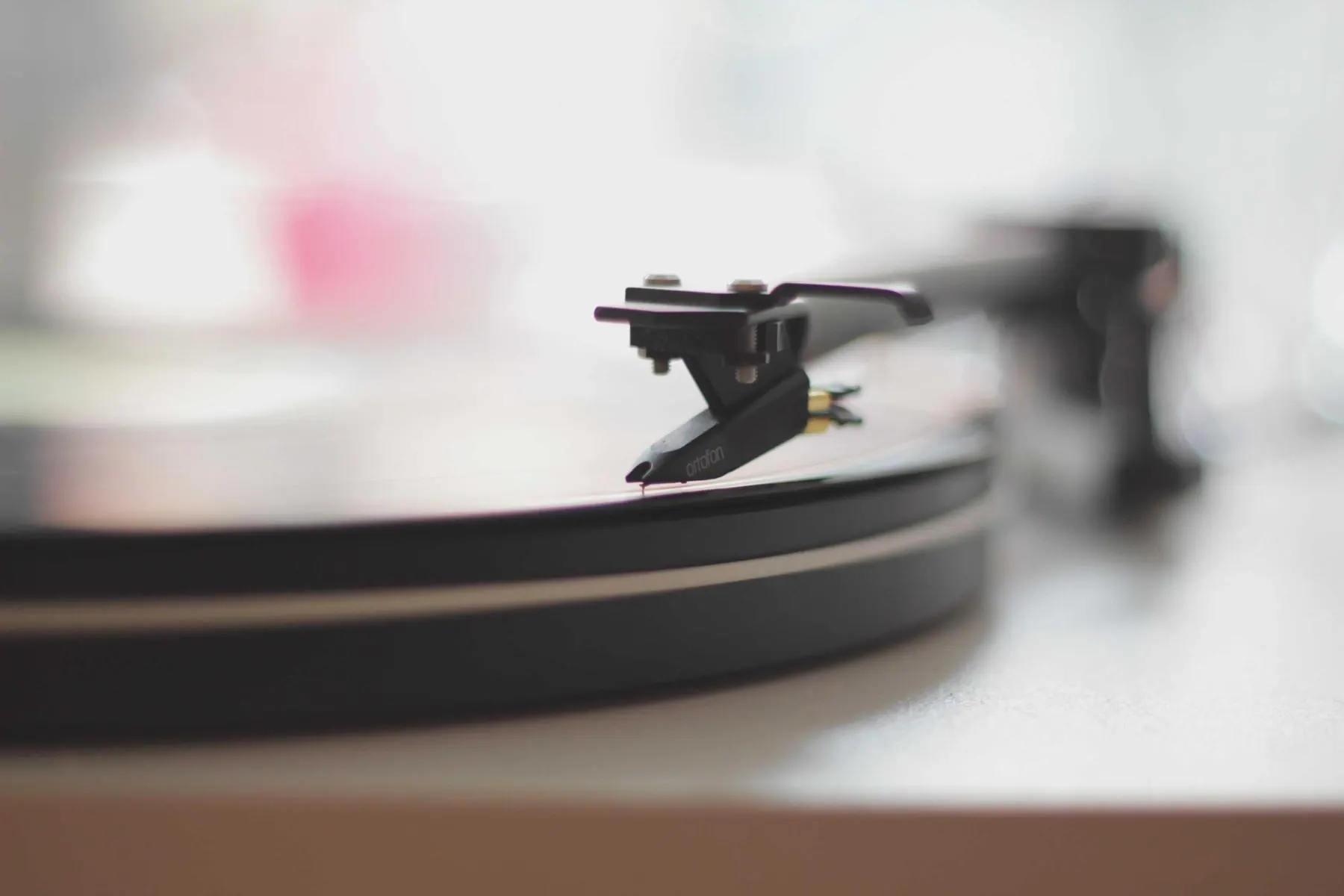
I understand why they went. They take up floor space that could hold stock, and some people go in, play six records and buy none. But the booths are the point. A record is a forty-minute commitment; you wouldn’t buy a coat without trying it on. The wardrobes came from a clearance, actually — the same house where I bought a box of choral records. I took the backs off, lined them with carpet, put a chair and a turntable in each. They’re not soundproof. You can faintly hear what’s playing next door, and sometimes two strangers end up comparing notes through the wall. I like that more than I should. The carpet is the important part. Without it, a wardrobe is just a very small, very loud room.
Are there rules?
Three. Hold the record by its edges. Lift the arm, don’t drag it. And if you’ve been in there more than an hour, come out and tell me what you found, because I want to know. Nobody has ever broken the third rule in a bad way. People come out looking like they’ve been somewhere.
Handwritten cards
And the cards. How did those begin?
Laziness, honestly. People kept asking what something was like, and I was saying the same thing over and over, so I wrote it down. The first ones were very dry — year, condition, a line about the sound. Then I started writing what I’d actually say if you were standing next to me. “Play side two first.” “Sounds like a long drive at night.” “Bought from a retired drummer who said this was the best session he ever played on, and I believe him.” The more personal they got, the more records went home with people. And then people started bringing the cards back with notes of their own on the reverse. I write them at the counter in the mornings before opening, with the record playing, so every card is written while I’m actually listening. If I can’t think of anything to say, the record goes in the bargain crate. That sounds harsh, but it keeps me honest.
Customers write back?
All the time. There’s a shoebox under the counter full of them. Someone disagreed with me about a jazz record so strongly they filled both sides of the card and clipped a second one to it. Someone else wrote that a record I’d described as “music for doing the dishes” had been played at their mother’s funeral, and that it had been exactly right. I keep those separately. You don’t really know what you’re selling. You think it’s a record. It ends up in someone’s life in a way you’ll never see. Every so often I pin one to the wall by the till, where people waiting to pay can read it.
The regulars
Who are your regulars?
There’s a retired schoolteacher who comes every Thursday, buys one record and brings back one she’s decided she doesn’t need, so her shelves never grow. There’s a teenager who started coming with his dad and now comes on his own to tell me what I’m missing. There’s a man who only buys records with birds on the cover. He doesn’t care what’s inside. I used to find that funny. Now I set them aside for him, and his collection is better than most. Then there are people who come in once a year, always around the same week, buy something and tell me what has happened to them since last time. I don’t always remember their names. I always remember what they bought.
You’ve mostly resisted selling online. Why?
I list a few rare things now and then, when a bill needs paying. But mostly, no. Online, a record is a photo and a price. In here, it’s a thing you pick up, turn over, read the back of, play in a wardrobe and argue with me about. I’m not against the internet. I just think there should be a few places where you have to be in the room. A shop that hurries is just a warehouse with a nicer door. And honestly, I’d miss the conversations. Half of what I know about music I learned from people standing at that counter telling me I was wrong.
What would you say to someone walking in for the first time?
Don’t look for anything. Flip through a bin you’d normally skip. Read the cards, pick one that makes you curious and take it to the back. If you hate it, tell me why — that’s useful too. The best records I own are ones I didn’t know existed when I walked into the room where they were. And come on a weekday afternoon if you can. Saturdays are lovely, but busy, and the booths have a queue. On a Tuesday you can have a wardrobe to yourself for as long as you like.
As I leave, he hands me a record I hadn’t asked about, with a card that reads, in blue ballpoint: “For an evening with the window open.” He was right.