CultureFeature
The library after closing time
In a small-town library, the last hour of the day belongs to the books coming home. An evening with the librarian who has locked its doors for nearly three decades.
In this story · 4 sections
At a quarter to seven, the library begins to speak more quietly. It is already a quiet place, of course — that is the arrangement — but there is a further quietness that arrives near the end of the day, once the last schoolchildren have been collected and the man who reads the newspapers every afternoon has folded them back onto their wooden poles and gone home. The radiators tick. Somewhere in the stacks, a single reader turns a page and then, sensing the hour, closes the book.
The library stands in a small town on a river, in a stone building that was once a grain exchange and still has the iron hooks in its ceiling to prove it. Ruth Halloran has worked here for twenty-eight years, the last nineteen as its librarian, and has locked its doors more evenings than she could count. I asked if I might stay one night after closing, to see what happens when the public leaves. She looked at me for a moment, as if deciding whether I would be in the way, and then said yes, as long as I didn’t mind carrying things.
The last half hour
The closing of a library begins well before the doors are locked. At half past six Ruth walks the building once, front to back, with no particular purpose that I could see. She straightens a chair. She picks a pencil up from the floor of the reference room and puts it in her cardigan pocket. She stops at the window by the local history shelves and looks out at the river for perhaps half a minute.
“I’m counting,” she said, when I asked. “Not people, exactly. Just checking the building’s all here.”
At ten to seven she rings a small brass hand bell, once, at the foot of the stairs. It is not loud. It does not need to be. Over the next few minutes the remaining readers drift toward the desk: a student with a stack of law books she is not allowed to take out, an elderly man returning a single detective novel he has plainly finished in an afternoon, a mother and a boy of about six who cannot choose between two books about whales. Ruth lets him take both. He carries them out under one arm, already reading the first page of the top one, while his mother steers him around the doorframe without comment. “The limit is a guideline,” she told me later, with the air of someone confessing to a crime she fully intends to commit again.
What comes back
Once the doors are locked, the real work turns out to be the returns. All day the books come home through a slot in the wall, dropping into a wheeled bin lined with foam, and each evening they must be checked in, looked over and sorted onto a trolley for reshelving. This is the part of the job Ruth likes best, and within ten minutes I understood why. A returned book is not quite the book that went out. It has been somewhere.
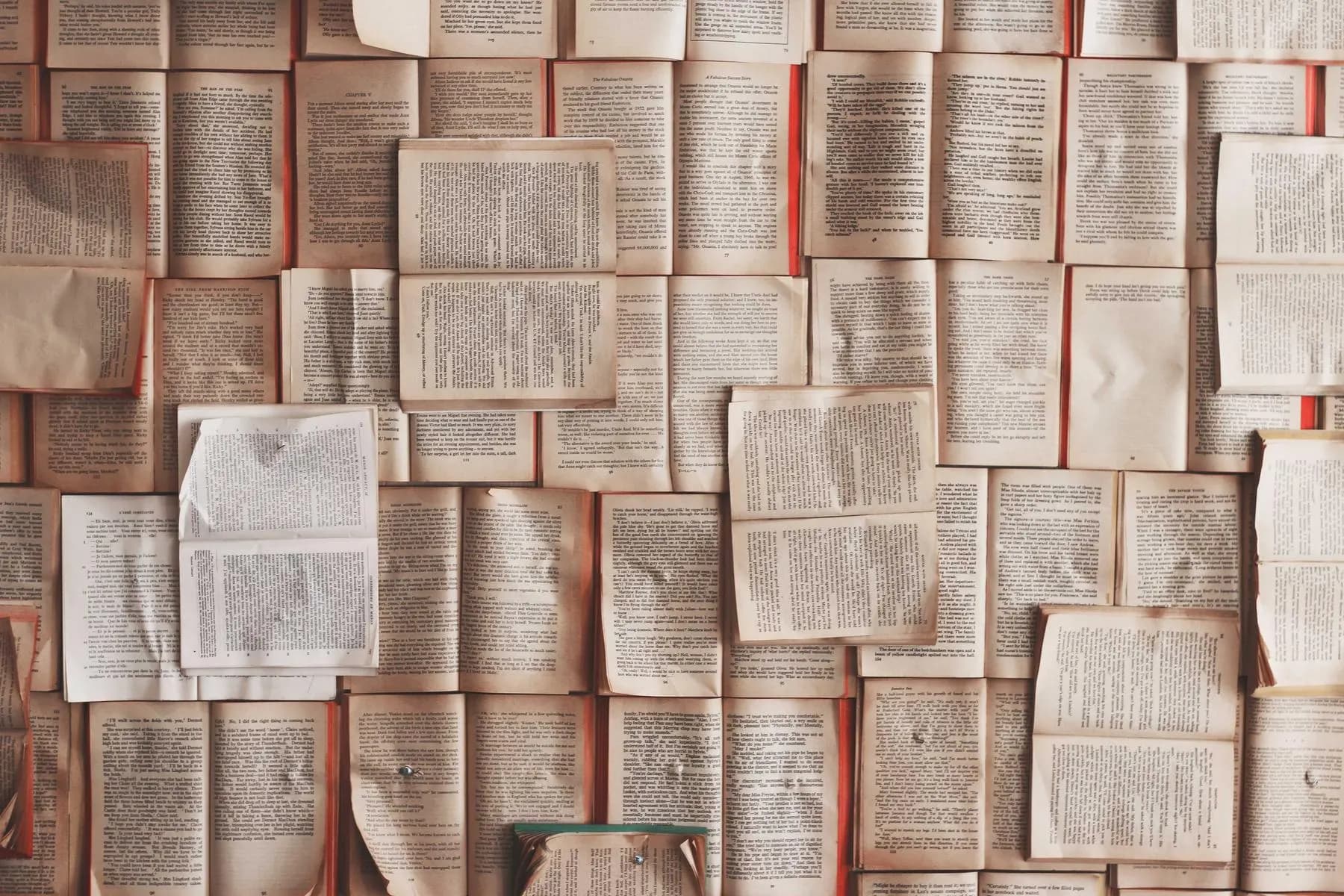
Some of them carry evidence. A paperback of poems comes back with a pressed leaf between two pages, flat and brown as a tea stain. A cookbook falls open at a recipe for plum cake, the page faintly freckled with what was probably batter. A guide to somewhere hot holds a boarding pass, a receipt for two coffees and a strip of photographs from a booth, four faces making four different expressions. Ruth checks each book, removes anything that ought not to be there, and drops it into a shallow wooden tray beneath the desk.
The tray is, I think, the heart of the place. It has been there longer than she has. On the night I visited it held bus tickets, a dried four-leaf clover folded into a square of wax paper, a child’s drawing of a horse that was mostly legs, a shopping list that read only “eggs, string, forgive D.,” and dozens of the narrow slips people use as bookmarks and then forget. She keeps anything personal for a month in case someone comes back for it. Hardly anyone does.
A returned book is not quite the book that went out.
“People leave themselves in books,” she said, turning the shopping list over as though there might be more on the back. “Not on purpose. You can’t read something for two weeks without some of your life getting in between the pages.”
She is careful not to make too much of it. She does not read the notes aloud or keep a scrapbook of them, and she was faintly uncomfortable when I wrote down the line about forgiveness. A library runs on a particular kind of trust: you are lent something, and nobody asks why. The tray is part of that discretion. Whatever comes back is held, briefly, and then let go.
A building put to sleep
With the returns sorted, Ruth begins what she calls putting the building to bed — said in the tone of someone who knows it sounds sentimental and has decided not to mind. The order never changes. The computers in the corner are shut down one by one. The blinds on the west windows come halfway down, so the morning sun will not bleach the spines of the large-print section. The children’s corner is tidied, and the stuffed fox that lives on the reading rug is sat upright against a cushion, facing the door.
“For the morning,” she said. “Somebody small always says hello to him.”
Then the trolley. She reshelves the day’s returns herself rather than leaving them for the assistant who comes in at nine, because she likes to see where everything goes. The left front wheel squeaks; she has been meaning to oil it for some years. Its route through the building is a kind of map of the town’s reading: romance and crime by the entrance, where they move fastest; a long, slow stretch through history and biography; a brief detour upstairs to the quiet room, where three books on beekeeping are returned and borrowed again by the same two people with what she describes as “a certain rivalry.”
I followed her with an armful of overflow. With the readers gone and the lights lowered, the building felt larger and more particular: the creak of one floorboard by the atlas stand, the smell of old radiator paint warming, the way a whole wall of spines settles into a single brownish color when the overhead lights go off and only the desk lamp is left. It was easy to imagine the books as a population settling in for the night, some of them tired from being out.
Borrowed time
Small libraries are often spoken of as endangered, and Ruth is not naive about budgets or the years ahead. But she did not want to talk about that, and after a while I stopped asking. What held her interest was the daily motion of the place — the going out and the coming back, the way a single copy of a novel can pass through forty pairs of hands and return each time with its spine a little softer and its corners a little rounder.
“A book in a shop belongs to nobody yet,” she said. “A book in your house belongs to you. These belong to everyone, one at a time. I think that’s the best arrangement anyone’s come up with.”
A little after eight she switched off the desk lamp. We stood in the doorway while she set the alarm, and I watched her look back once into the dark room, the way you might glance into a bedroom where someone has finally fallen asleep. Then she locked the door, tried the handle twice, and walked home along the river. The returns slot, I noticed, was already open for the morning. Somewhere in the town, someone was reading the last pages of a book that would come back through the slot tomorrow, carrying something they did not know they had left inside it.