LivingNote
Notes on a borrowed kitchen
Three weeks of house-sitting, someone else’s knives and a spice shelf with a logic of its own. A short note on cooking as a guest in an empty house.
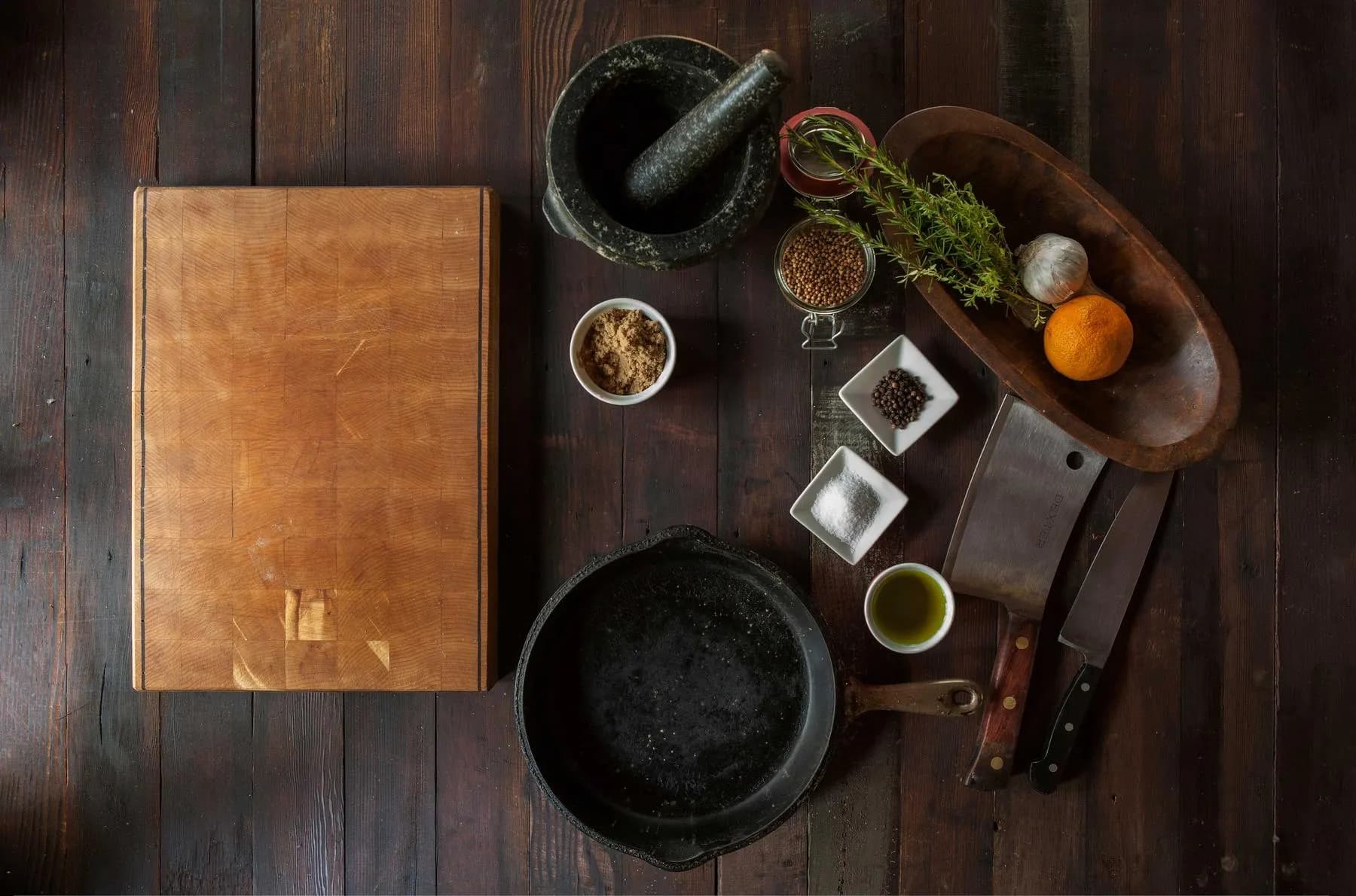
For three weeks this summer I looked after a friend’s house while she was away: a cat, a row of tomato plants on the back step, and a kitchen I had eaten in many times but never cooked in. I assumed it would be like cooking anywhere. It wasn’t. A kitchen is a set of decisions someone else has already made, and for the first few days I bumped into every one of them.
The knives came first. She has three, which is the right number, and two of them are blunt, which is the usual number. The sharp one is a small paring knife with a wooden handle gone pale from washing, and it is plainly the one she reaches for, because it lives at the front of the drawer while the others sulk at the back. By the end of the first week I was reaching for it too. You cut smaller, and more carefully, when the blade is short.
The spice shelf took longer. It isn’t alphabetical, and it isn’t sorted by cuisine. After a few days I understood it is arranged by use: cumin, chili flakes and black pepper in front, a middle row of things reached for weekly, and at the very back a jar of whole cloves with a handwritten label and a date four years old. Bought, I would guess, for one recipe, and kept out of a kind of loyalty. I have that jar in my own kitchen. Everyone does.
She has habits I adopted without deciding to. A folded cloth always on the oven handle. A bowl by the sink for peelings, which go out to the compost bin beside the tomatoes. Bread kept cut-side down on the board instead of wrapped. Salt in a small lidded dish by the stove rather than a shaker, so you take it with your fingers and learn what a pinch actually is.
And there is one pan — heavy, slightly warped, its base dark with years of use — that does nearly everything. I made eggs in it, a pot of white beans, a tray’s worth of her tomatoes roasted down with garlic, and on the last night an onion soup that took the whole evening. It holds heat in a way my pans at home don’t, and it rocks very slightly on the burner, which irritated me for two days and then stopped.
Cooking in someone else’s kitchen is a little like reading their handwriting. You get a sense of a person through the things they have worn smooth. I came home with no new recipes. But I moved my salt into a dish, and I have stopped pretending I will sharpen the knives at the back of my drawer.
I left her the rest of the soup in the fridge, with a note. It seemed the least a guest could do.